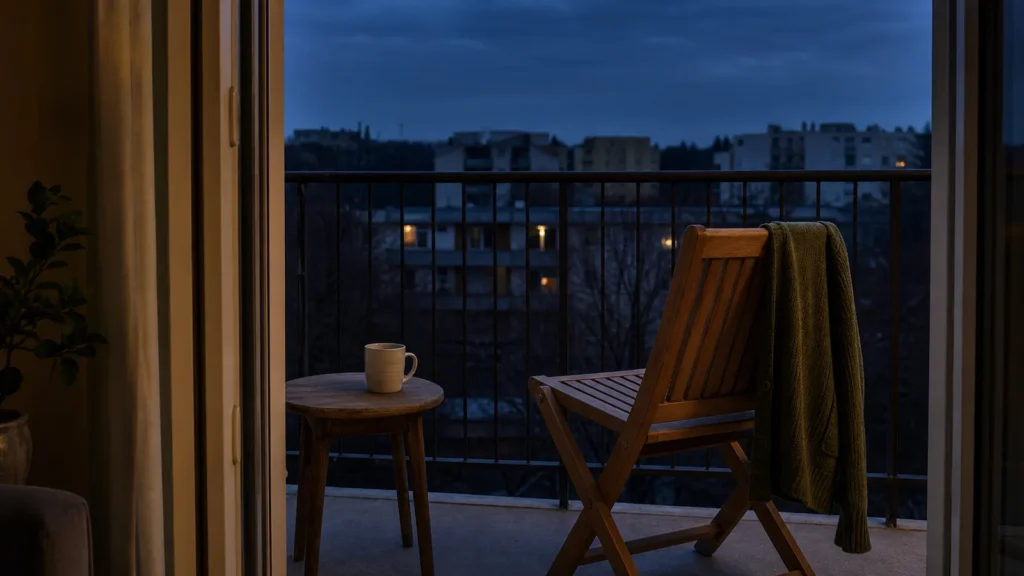
There is a particular quiet to being awake when the people you would call are asleep.
The room can feel larger than it did in daylight. An empty place becomes more visible. A distant relationship feels farther away. You may not need an answer as much as the sound of another person’s voice.
Psalm 63 does not mention 3 A.M. It speaks of “the night watches,” the portions of the night through which someone remained awake or kept guard. Its superscription places David in the wilderness of Judah, though it does not tell us which wilderness moment this was.
The prayer begins there, not in a peaceful room but in a dry and weary land:
God, you are my God.
I will earnestly seek you.
My soul thirsts for you.
My flesh longs for you,
in a dry and weary land, where there is no water.Psalm 63:1, WEB
The psalmist remembers seeing God in the sanctuary. That memory matters because the sanctuary is not where he is now. He is praying from distance, carrying the memory of worship into a place that does not feel like worship.
Later, the prayer reaches the bed:
when I remember you on my bed,
and think about you in the night watches.
For you have been my help.
I will rejoice in the shadow of your wings.
My soul stays close to you.
Your right hand holds me up.Psalm 63:6-8, WEB
Notice the tense: “you have been my help.” The psalmist reaches into memory. He does not have to manufacture a new feeling before he can pray. He brings what he has known of God into the hours when the wilderness is still the wilderness.
The rest of the psalm makes clear that danger has not vanished. Enemies remain at the edge of the song. The shadow of God’s wings is not a way of pretending that the night is harmless or that loneliness is imaginary.
Nor does the psalm say that remembering God will make the room feel less lonely or put the worshiper to sleep.
It gives us two movements to hold together: “My soul stays close to you” and “Your right hand holds me up.”
There is the small movement of a person staying close. And beneath it is the stronger movement of God holding the person who prays.
Tonight, staying close may be no more dramatic than borrowing those words. You do not have to create a sense of nearness. You can say what the psalm says and let the prayer remain true even if the room still feels empty.
A Prayer for the Night Watch
Place one hand open beside you. Let it represent the companionship you wish were near. Then pray slowly:
God, I am awake, and this room feels lonely.
You have been my help.
My soul stays close to you.
Your right hand holds me up.
Keep me through this watch, whether or not my feelings change.
God’s presence is not a reason to refuse human company. If there is someone whose voice you need, name that person now. When contact is possible, take one ordinary step: send a message, make a call, or ask to share some time. Prayer does not make that need less faithful.
Prayer
God of the night watches, meet me in this place that feels dry and far from home. Receive the names, absences, and unanswered words that are with me. When I cannot feel your nearness, let remembered help be enough for this small prayer. Hold me more firmly than I can hold on. And when morning comes, give me courage to reach toward the people whose presence is part of your good gift. Whether I sleep or remain awake, stay with me through this watch. Amen.
Reflect
Whose voice would help you feel less alone when contact is possible?
Continue
Related: The God Who Keeps Watch While You Sleep
Related: When Your Body Is Tired but Your Mind Keeps Working
Next: Receiving the Day’s Limits
Scripture: Psalm 63:1-8, World English Bible.
Written by: Hannah Reed
Scope: This devotional offers Christian spiritual support and education. It does not provide medical advice, diagnosis, treatment, therapy, or crisis services.